

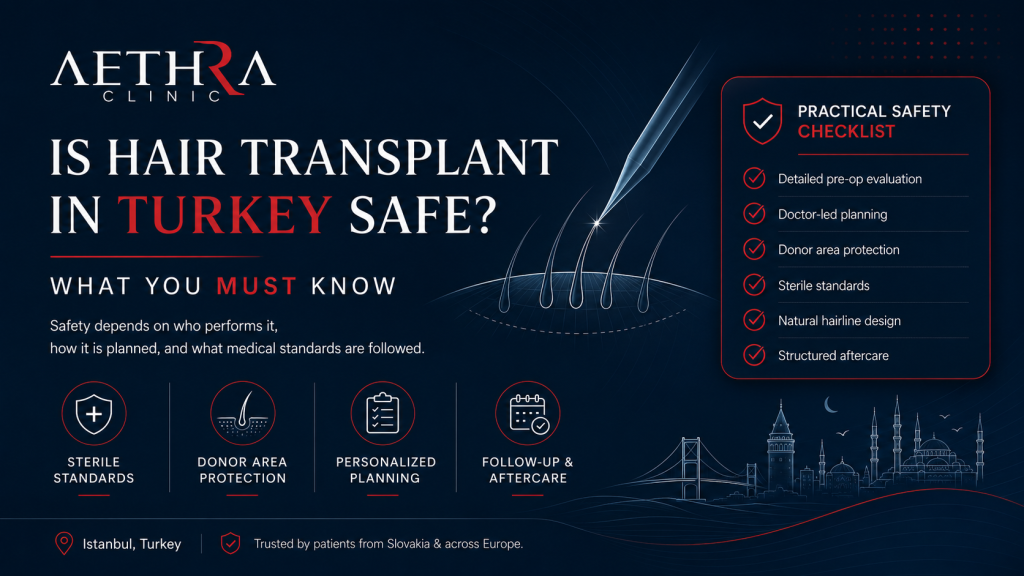
What You Must Know
Is hair transplant in Turkey safe? is one of the most common questions European patients ask especially when they see very different prices, clinic styles, and promises online. The honest answer is: a hair transplant in Turkey can be safe, but safety depends far more on who performs it, how it’s planned, and what medical standards are followed than on the country itself.
A hair transplant is a medical procedure involving local anesthesia, skin incisions, graft handling, and wound healing. That means your safety is shaped by clinical decision-making, infection control, and the team’s ability to protect your donor area and design a natural result not by marketing packages or graft numbers.
What “Safe” Actually Means in a Hair Transplant
Safety isn’t only about avoiding serious complications (though that matters). In hair transplantation, “safe” also means:
- Medically appropriate candidate selection (not everyone is suitable)
- Correct graft planning based on hair loss pattern and donor capacity
- Donor area protection to prevent overharvesting and long-term thinning
- Natural hairline design that matches age, facial structure, and future loss
- Sterile technique and infection prevention
- Proper anesthesia monitoring and aftercare
- Clear follow-up plan for healing, shock loss, and growth phases
If any of these are weak, you may still “get grafts,” but your outcome and your donor area may be compromised.
Why Turkey Has a Strong Reputation
Turkey is well-known because it has a long-established medical tourism ecosystem, experienced surgical teams, and a high volume of hair restoration patients. Many clinics deliver good care.
But high demand has also created a market where some providers operate like mass-production clinics. Risks tend to increase when clinics prioritize speed and volume over medical planning especially if key steps are delegated without adequate medical oversight.
The takeaway: Turkey isn’t the risk. Choosing the wrong clinic model is.
The Biggest Safety Factor: Doctor Involvement
One of the clearest safety separators is whether the procedure is truly doctor-performed and doctor-planned.
In a doctor-led approach, the doctor typically handles or directly supervises critical steps such as:
- medical evaluation and candidacy decision
- donor capacity assessment and graft planning
- hairline design and recipient area strategy
- management of difficult cases (diffuse thinning, previous transplants, limited donor)
- oversight of anesthesia and intraoperative decision-making
At Aethra Clinic, the focus is doctor-performed Sapphire FUE with Dr. Metehan Ayaloğlu’s direct medical involvement, designed for patients who want a premium, low-volume experience rather than a high-throughput “line” system.
Why Sapphire FUE Can Support Safer Healing When Done Properly
Sapphire FUE refers to using sapphire blades to create recipient channels. When performed with the right planning, it may support:
- precise channel angles and directions (important for naturalness)
- controlled channel sizing aligned with graft type
- clean, consistent incisions that support organized placement
However, technique alone does not guarantee safety. The key is planning + execution + graft handling + sterile standards. Sapphire FUE is safest when it’s part of a structured medical protocol not a “buzzword.”
A Practical Safety Checklist Before You Book
Use this checklist to evaluate whether a clinic is likely to be safe and medically responsible:
1) Pre-op evaluation is detailed (not rushed)
You should be asked about:
- hair loss history and family pattern
- medications and medical conditions
- scalp health (seborrheic dermatitis, psoriasis, active inflammation)
- donor density and donor stability
- realistic long-term plan (not just “max grafts”)
2) Donor area protection is a stated priority
Ask how they prevent overharvesting and patchiness. A safe clinic plans extraction to protect donor aesthetics long-term.
3) Hairline design is personalized
A safe hairline is not copied from a template. It should reflect your age, facial proportions, and likely future loss.
4) Sterility and infection control are clear
Look for a surgical environment, not a “salon” vibe. Post-op instructions should be structured and specific.
5) The clinic doesn’t overpromise
Be cautious of guarantees, unrealistic density claims, or “one-size-fits-all” graft counts. Results may vary and depend on donor quality, healing, and long-term hair loss pattern.
6) Follow-up is built into the process
Healing support matters especially for international patients who travel home. You should know exactly how follow-up happens and who answers medical questions.
Red Flags That Suggest Higher Risk
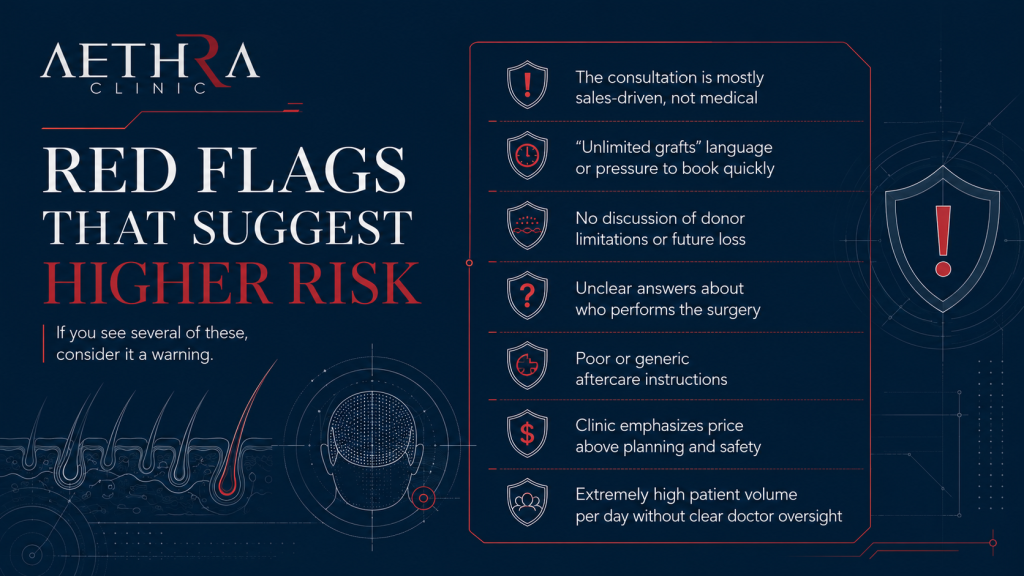
If you see several of these, consider it a warning:
- the consultation is mostly sales-driven, not medical
- “unlimited grafts” language or pressure to book quickly
- no discussion of donor limitations or future loss
- unclear answers about who performs the surgery
- poor or generic aftercare instructions
- clinic emphasizes price above planning and safety
- extremely high patient volume per day without clear doctor oversight
Safety for Slovak and European Patients Traveling to Istanbul
For patients traveling from Slovakia and across Europe, safety also includes logistics:
- plan enough time in Istanbul for early post-op checks
- ensure you receive written aftercare guidance for the first 10–14 days
- confirm how the clinic supports you if you have swelling, redness, or concerns after returning home
- avoid tight travel schedules that force stress, poor sleep, or missed aftercare steps
A boutique model can be helpful here, because communication and follow-up are typically more direct and consistent.
What Aethra Clinic Emphasizes for Safety
Aethra Clinic is positioned for patients who want a premium, medical-first experience:
- Doctor-performed Sapphire FUE with Dr. Metehan Ayaloğlu’s direct involvement
- Natural hairline design based on facial structure and long-term planning
- Donor area protection and responsible graft planning
- Low-volume boutique care, not a mass clinic approach
- Ethical patient selection (not everyone is automatically approved)
- Dedicated follow-up, especially important for European patients traveling to Istanbul
Final Thoughts
To understand which doctor-performed Sapphire FUE treatment plan may be suitable for your hair loss pattern, donor area and long-term goals, you can get a personalized hair transplant assessment from Aethra Clinic.
FAQs
Is hair transplant in Turkey safe for European patients?
It may be safe when the clinic follows medical standards, performs proper donor planning, and provides structured aftercare and follow-up. Safety depends on the provider, not the country.
What is the biggest risk factor when choosing a clinic in Turkey?
A common risk factor is choosing a high-volume clinic model where planning and key steps may not have consistent medical oversight.
How can I tell if a hair transplant is doctor-performed?
Ask who performs the critical steps (planning, extraction strategy, channel opening, and medical supervision) and request a clear explanation of the doctor’s role during the procedure day.
Can Sapphire FUE be safer than other methods?
Sapphire FUE may support precise channel creation and organized placement when performed properly. Outcomes still depend on medical planning, sterility, graft handling, and donor management.
What should I avoid before booking a hair transplant in Turkey?
Avoid clinics that guarantee results, pressure you to book quickly, or don’t discuss donor limitations, long-term planning, and who performs the surgery.