

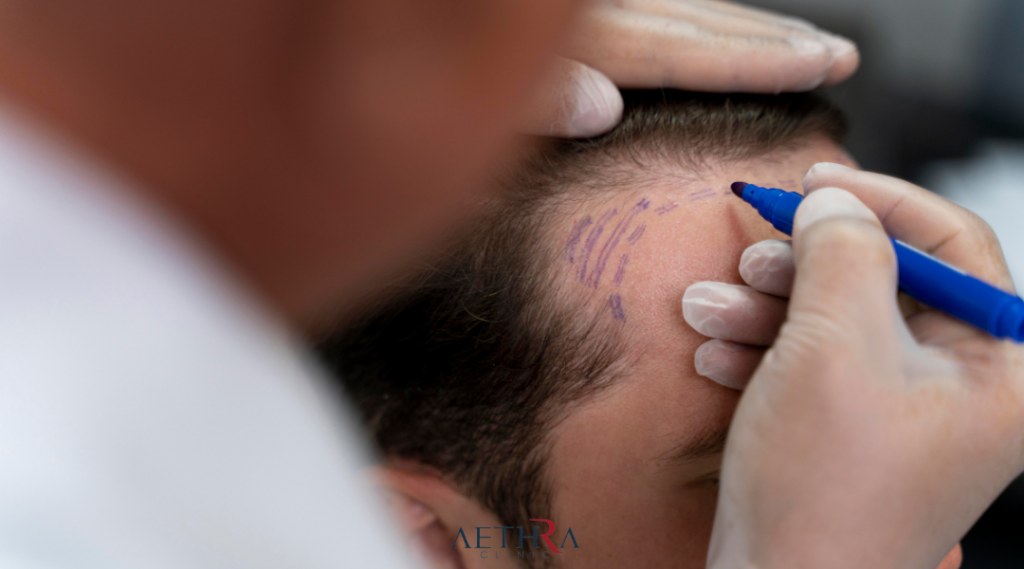
Natural Hairline Design in Hair Transplant is not only about covering a bald or thinning area. For most patients, the real goal is much more personal: they want their hair to look natural again. They want a hairline that fits their face, age, hair loss pattern and long-term appearance, without looking artificial or overdesigned.
This is why natural hairline design is one of the most important parts of a hair transplant procedure. Even if a high number of grafts are transplanted, the final result may still look unnatural if the hairline is placed too low, too straight, too dense in the wrong area or planned without considering the patient’s future hair loss.
At Aethra Clinic, natural hairline design is approached as a medical and aesthetic planning process. Each Sapphire FUE hair transplant is planned and performed by Dr. Metehan Ayaloğlu in Istanbul, with careful attention to facial proportions, donor area condition, graft direction, density balance and long-term donor preservation.
For patients from Slovakia and across Europe, this doctor-performed approach provides a more personalized alternative to high-volume hair transplant models where the hairline may be treated as a standard template rather than an individual medical design.
Table of Contents
What Is Natural Hairline Design in Hair Transplant?
Natural hairline design is the process of planning where the new hairline should begin, how it should be shaped and how transplanted grafts should be placed to create a realistic appearance.
A natural hairline does not usually look perfectly straight. Real human hairlines have small irregularities, soft transitions and different levels of density from the front to the inner zones. The frontal hairline should also match the patient’s face, forehead height, age, hair type and existing hair loss pattern.
In hair transplant surgery, the design must also respect the donor area. The donor area is limited, and every graft should be used responsibly. Placing the hairline too low may consume too many grafts in the front and leave fewer grafts available for future hair loss. This can create an unnatural result years later, especially if the patient continues to lose native hair.
For this reason, natural hairline design is not simply drawing a line on the forehead. It is a long-term medical decision.
Why the Hairline Is So Important
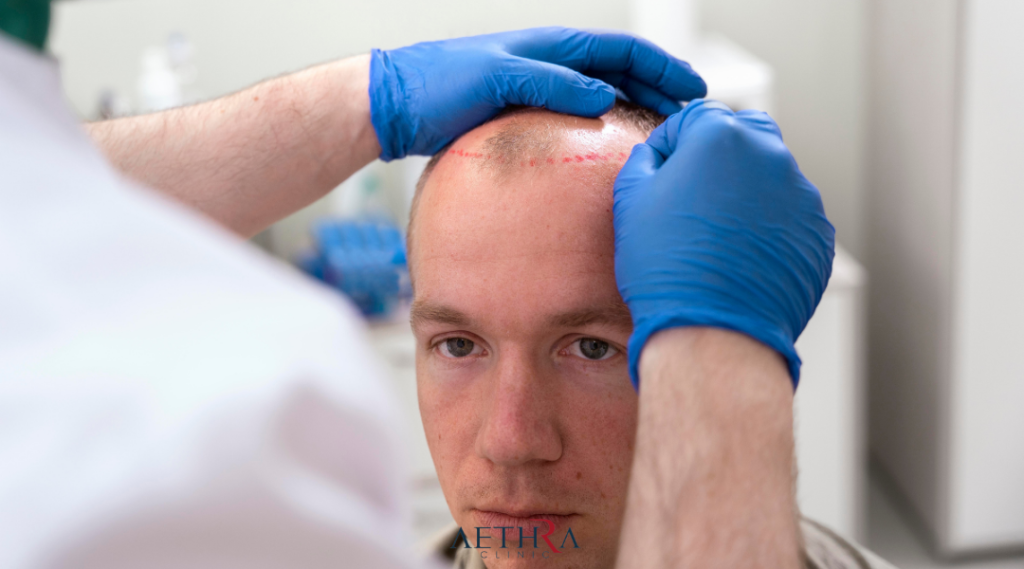
The hairline is the most visible part of a hair transplant result. It frames the face and strongly affects how natural the final appearance looks.
When people look at someone’s face, the frontal hairline is one of the first areas they notice. If the hairline is too low, too sharp, too symmetrical or placed with the wrong angle, the result can appear artificial even if the grafts survive well.
A natural result depends on several important factors:
- The hairline should fit the patient’s facial proportions.
- The frontal zone should not be planned too aggressively.
- The direction and angle of the grafts should follow natural hair growth.
- Single-hair grafts should usually be used in the most visible front line.
- Density should be planned gradually, not as a hard wall of hair.
- The donor area should be protected for possible future needs.
At Aethra Clinic, these details are considered before the operation begins. Dr. Metehan Ayaloğlu evaluates the patient’s hair loss pattern, donor area strength, existing hair direction and long-term expectations before deciding on the most appropriate hairline design.
A Natural Hairline Should Match the Patient’s Face
There is no single ideal hairline for every patient. A hairline that looks natural on one person may look unsuitable on another.
Facial structure, forehead shape, temple recession, age and hair characteristics all influence the design. For example, a very young and low hairline may not be appropriate for every male patient, especially if the patient has progressive hair loss. In many cases, a slightly mature and balanced hairline can look more natural and remain more stable over time.
A good hairline design should not make the patient look like a different person. It should restore balance to the face while still respecting the patient’s natural anatomy.
This is especially important for European patients who often compare many clinics and before-after results before making a decision. The most natural hair transplant results are usually not the most dramatic ones at first glance. They are the results that look normal, balanced and believable in daily life.
Why a Hairline Should Not Be Too Straight
One of the most common signs of an unnatural hair transplant is a perfectly straight hairline. Natural hairlines usually have small irregularities and a soft transition zone.
When a hairline is drawn like a sharp line, it may look artificial under daylight, in photos or when the hair is styled backward. This can make the transplant visible even if the density is good.
A natural hairline should have micro-irregularities. These small variations help the transplanted area blend with the patient’s face and existing hair. The goal is not to create a messy or random design, but to avoid a flat, artificial appearance.
In Sapphire FUE hair transplant planning, the opening of channels plays an important role in this process. The direction, depth and angle of the channels influence how the transplanted hair will grow. This is one of the reasons why doctor involvement is essential at Aethra Clinic.
The Role of Graft Angle and Direction
Hair does not grow in the same direction everywhere on the scalp. The frontal hairline has a different angle compared with the mid-scalp or crown area. If grafts are placed at the wrong angle, the hair may grow upward, outward or in a direction that does not match the natural pattern.
This can make the result look unnatural even if the number of grafts is high.
For a natural hairline, the transplanted grafts should follow the natural exit angle of the surrounding hair. The frontal area usually requires careful, refined placement to avoid a pluggy or artificial appearance.
At Aethra Clinic, Sapphire FUE is used with a focus on precise channel opening and natural hair direction. Since the procedure is performed by Dr. Metehan Ayaloğlu, the design and technical execution are connected rather than separated between different teams.
Density Planning
Many patients believe that the best hair transplant result comes from the highest number of grafts. In reality, natural density depends on smart planning, not only graft quantity.
If too many grafts are used in the hairline without considering donor capacity, future hair loss and scalp coverage, the result may create problems later. The donor area is limited, and it must be managed responsibly.
A natural hairline usually needs a soft density transition. The very front should not look like a thick wall. Behind the frontal line, density can gradually increase to create the impression of fuller hair.
This layered approach helps create a more realistic result. It also allows the surgeon to use grafts more strategically, especially in patients who may need future coverage in the mid-scalp or crown area.
At Aethra Clinic, donor area protection is a central part of the treatment plan. The goal is not to use the maximum possible number of grafts at any cost, but to create a balanced and medically responsible result.
Why Donor Area Protection Affects Hairline Design
The donor area is the source of the grafts used in a hair transplant. Once grafts are removed, they do not regenerate in the same way. This makes donor management one of the most important responsibilities in hair transplant planning.
A hairline that is too low or too dense may look attractive in the short term, but it can consume too many grafts. If the patient’s hair loss progresses later, there may not be enough donor capacity left to treat other areas.
This is why ethical planning matters. A good hair transplant should consider not only how the patient will look after 12 months, but also how the result may age over time.
For younger patients or patients with ongoing hair loss, conservative and natural design can often be safer than an aggressive low hairline. The aim is to create improvement without damaging future options.
Doctor-Performed Hairline Design at Aethra Clinic
Hairline design requires both medical judgment and aesthetic sensitivity. It is not a standard drawing and should not be delegated without proper medical assessment.
At Aethra Clinic, each Sapphire FUE hair transplant is performed by Dr. Metehan Ayaloğlu. This means the hairline is not treated as a template. It is personally planned according to the patient’s donor area, hair loss pattern, facial structure and long-term needs.
This doctor-performed approach is especially important for international patients who travel to Istanbul from Slovakia and other European countries. Many patients want more than a low-cost hair transplant package. They want to know who is planning their operation, who is designing their hairline and who will follow their recovery after the procedure.
Aethra Clinic focuses on low-volume, personalized care rather than high-volume hair transplant systems. This allows more attention to planning, execution and post-operative follow-up.
Sapphire FUE and Natural Hairline Results
Sapphire FUE is a hair transplant technique where grafts are extracted from the donor area and implanted into recipient channels opened with sapphire blades. The technique allows refined channel creation when performed with proper planning and surgical precision.
However, the technique alone does not guarantee a natural result. The outcome depends on how the hairline is designed, how the grafts are selected, how the channels are opened and how the donor area is managed.
At Aethra Clinic, Sapphire FUE is used as part of a doctor-led treatment philosophy. The focus is on natural hairline design, appropriate graft distribution, donor area protection and dedicated follow-up.
For patients comparing hair transplant clinics in Turkey or Europe, this distinction is important. A technique is only as good as the planning and medical judgment behind it.
Common Mistakes in Hairline Design
An unnatural hairline can happen for several reasons. Some of the most common mistakes include:
- Placing the hairline too low for the patient’s age and future hair loss risk.
- Creating a perfectly straight frontal line.
- Using too much density in the very front.
- Ignoring temple recession and facial proportions.
- Placing grafts at the wrong angle or direction.
- Using grafts aggressively without protecting the donor area.
- Planning the operation only around graft numbers instead of long-term design.
These mistakes can be difficult to correct later. Repair surgery may require additional grafts, and in some cases, the donor area may already be weakened. This is why choosing the right planning approach from the beginning is extremely important.
Natural Hairline Design for Slovak and European Patients
Patients from Slovakia and Europe often research hair transplant options carefully before deciding where to have surgery. Many compare local clinics, Turkey-based clinics and international treatment packages.
For these patients, the main question should not only be “Where is the cheapest hair transplant?” A better question is: “Who will design my hairline, perform my procedure and follow my recovery?”
Aethra Clinic offers doctor-performed Sapphire FUE hair transplant treatment in Istanbul with European patient coordination through its Slovakia-based structure. The clinic focuses on personalized treatment planning, natural results, donor area protection and a premium boutique experience for international patients.
This approach is especially suitable for patients who want a natural-looking hairline rather than an aggressive or artificial result.
How to Know If Your Hairline Design Is Right
Before having a hair transplant, patients should feel that their hairline design has been explained clearly. A good consultation should include discussion of:
- Your current hair loss pattern.
- Your donor area condition.
- Your age and possible future hair loss.
- Your facial proportions.
- The planned hairline height and shape.
- The number of grafts that can be used safely.
- The expected recovery and growth timeline.
- The long-term plan if hair loss continues.
If the consultation focuses only on selling a graft number or offering a standard package, this may not be enough for a safe and natural result.
At Aethra Clinic, patients receive an individual assessment before treatment planning. The aim is to create a hairline that looks natural, respects the donor area and fits the patient’s long-term appearance.
Final Thoughts
A natural hair transplant result starts with the hairline. The design should not be copied from another patient, drawn too aggressively or planned only for a dramatic before-after image.
The best hairline is the one that fits the patient’s face, respects future hair loss, uses grafts responsibly and grows in a natural direction.
At Aethra Clinic in Istanbul, Dr. Metehan Ayaloğlu performs Sapphire FUE hair transplant procedures with a focus on natural hairline design, donor area protection and personalized patient care. For patients from Slovakia and across Europe, this doctor-performed approach offers a premium alternative to high-volume hair transplant models.
If you are considering a hair transplant and want a natural-looking result, the first step is not choosing the lowest price or the highest graft number. The first step is a careful medical assessment and a hairline design that is planned for you.
Frequently Asked Questions
What makes a hair transplant hairline look natural?
A natural hair transplant hairline depends on facial proportions, age-appropriate design, soft irregularity, correct graft angle, proper direction and balanced density. It should not look too straight, too low or too dense in the frontal line.
Is Sapphire FUE good for natural hairline design?
Sapphire FUE can support natural hairline results when it is performed with careful planning and precise channel opening. However, the technique alone is not enough. The surgeon’s design, graft distribution and donor area management are essential.
Why should the hairline not be too low?
A hairline that is placed too low may look unnatural and may use too many grafts from the donor area. This can create problems if the patient experiences further hair loss in the future. A balanced, age-appropriate hairline is often safer and more natural.
How many grafts are needed for a natural hairline?
The number of grafts depends on the patient’s hair loss pattern, donor area condition, hair thickness, desired density and long-term plan. A natural hairline is not only about graft numbers; it is about proper design and responsible graft placement.
Who performs the hairline design at Aethra Clinic?
At Aethra Clinic, the Sapphire FUE hair transplant procedure, including hairline planning and medical assessment, is performed by Dr. Metehan Ayaloğlu. The clinic focuses on doctor-performed treatment, natural results, donor area protection and personalized follow-up for patients from Slovakia, Europe and other international regions.