

Hair loss is one of the most common concerns for men and women, especially when thinning starts slowly and the scalp becomes more visible over time. Many people begin searching for non-surgical solutions before considering a hair transplant, and one of the most discussed options is the dermaroller for hair loss.
Dermarolling, also known as scalp microneedling, is a technique that uses tiny needles to create controlled micro-channels on the scalp surface. The goal is not to damage the skin, but to stimulate a natural healing response, support blood circulation and potentially improve the absorption of topical treatments such as minoxidil.
However, using a dermaroller for hair growth is not as simple as rolling a device randomly over the scalp. The correct needle length, hygiene, frequency, scalp condition and hair loss stage all matter. When used incorrectly, dermarolling may cause irritation, infection, inflammation or unnecessary scalp trauma.
At Aethra Clinic, we believe hair restoration should always begin with proper medical evaluation. A dermaroller may support early-stage thinning in selected patients, but it cannot replace a medically planned hair transplant when the hair follicles are already lost. This guide explains how dermaroller treatment works, how to use it more safely and when professional hair restoration planning may be necessary.
Table of Contents
What Is a Dermaroller for Hair Loss?
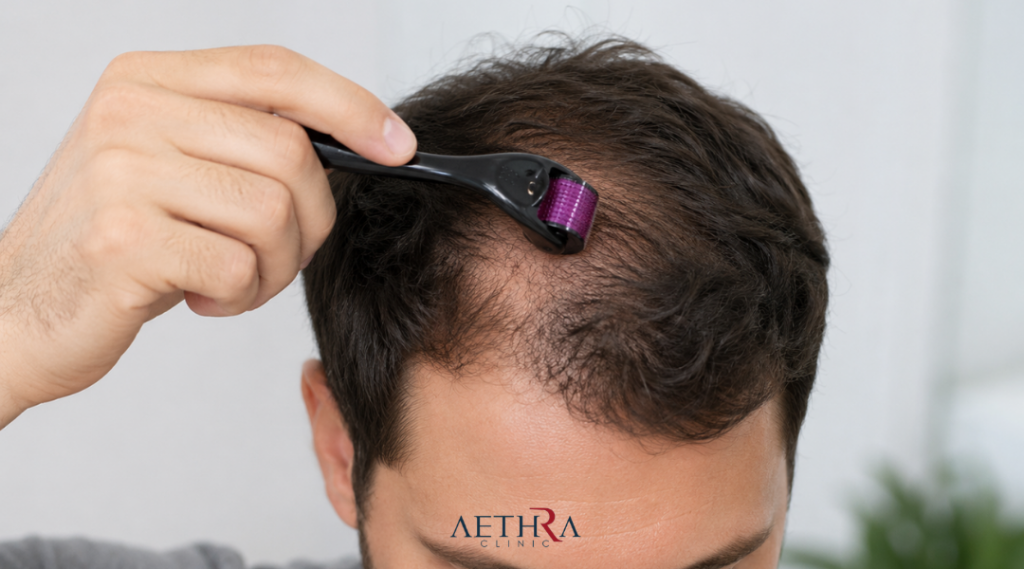
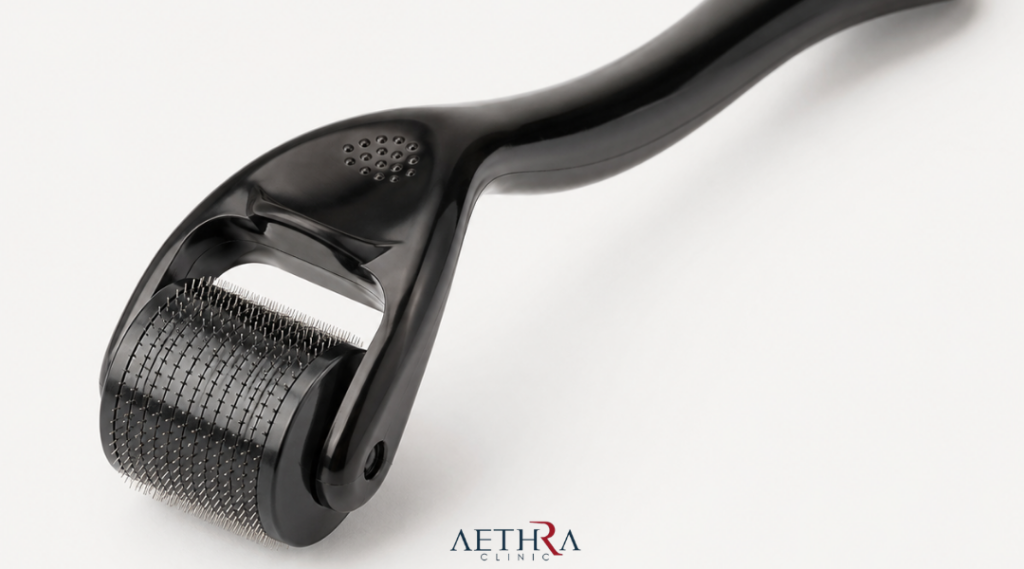
A dermaroller is a handheld device covered with very small needles. When rolled gently over the scalp, these needles create tiny micro-injuries in the skin. This process is known as microneedling.
In hair loss care, microneedling is mainly used to support scalp stimulation and improve the effect of certain topical treatments. Research has explored microneedling especially in androgenetic alopecia, also known as male or female pattern hair loss. Some studies suggest that microneedling combined with treatments such as topical minoxidil may improve hair density and hair shaft thickness compared with topical treatment alone. The idea is based on three main mechanisms:
Micro-stimulation of the scalp may activate wound-healing pathways.
Temporary micro-channels may help topical treatments penetrate the scalp more effectively.
Local blood flow and cellular activity around weakened hair follicles may be supported.
Still, dermarolling should be understood as a supportive method, not a guaranteed hair regrowth solution.
Can Dermaroller Reactivate Hair Growth?
A dermaroller may help improve the appearance of thinning hair in some patients, especially when hair follicles are still alive but weakened. This is why it is often discussed for early-stage androgenetic alopecia, diffuse thinning or patients who still have miniaturized hair in the affected area.
But there is an important limitation: a dermaroller cannot create new hair follicles where follicles no longer exist.
If the scalp area is completely bald and the follicles have been permanently lost, dermarolling alone will not restore natural density. In such cases, a hair transplant may be the only effective option to bring hair follicles back to the area.
This is why patient selection matters. Before relying on dermaroller treatment, it is important to understand the reason behind hair loss, the condition of the donor area, the degree of miniaturization and whether medical therapy or surgical planning is more appropriate.
Who May Benefit from Dermaroller Treatment?
Dermaroller treatment may be considered for patients with early or moderate hair thinning, especially when the goal is to support existing hair rather than replace lost follicles.
It may be useful for:
- Men with early male pattern hair loss
- Women with diffuse thinning or early female pattern hair loss
- Patients using topical minoxidil under medical guidance
- Patients who want to support scalp stimulation before hair loss becomes advanced
- Patients with miniaturized but still active hair follicles
It is usually less effective for:
- Completely bald areas
- Advanced hair loss with no visible miniaturized hair
- Scarring alopecia
- Active scalp infections or inflammatory scalp diseases
- Patients with poor hygiene routines or unsafe home-use habits
A medical evaluation is always important before starting any scalp treatment. Hair loss can be caused by genetics, hormonal changes, thyroid problems, iron deficiency, stress, medication, autoimmune disease or other medical conditions. Treating all hair loss the same way may lead to poor results and wasted time.
Best Dermaroller Needle Length for Hair Loss
Needle length is one of the most important parts of dermaroller safety.
For home use, shorter needle lengths are generally preferred because they reduce the risk of deeper skin injury. Many at-home dermarollers are around 0.25 mm to 0.5 mm. These may mainly help with product absorption and mild scalp stimulation.
Longer needle lengths such as 1.0 mm or 1.5 mm are often used in more professional microneedling settings and should be approached carefully. Deeper needling may increase irritation, bleeding, infection risk and post-treatment inflammation if performed incorrectly.
A general safety-focused approach is:
- 0.25 mm: mainly for topical absorption support
- 0.5 mm: mild scalp stimulation, often used cautiously at home
- 1.0 mm and above: better reserved for professional guidance
For most patients, aggressive needling is not necessary. More pressure, more bleeding or longer needles do not mean better hair growth. In hair restoration, controlled treatment is always better than trauma.
How to Use Dermaroller for Hair Loss Safely
Using a dermaroller correctly requires hygiene, gentle technique and consistency. The goal is controlled micro-stimulation, not injury.
Step 1: Clean the Dermaroller
Before every use, disinfect the dermaroller properly. The device comes into direct contact with the scalp, so poor hygiene can introduce bacteria into the skin.
Use an appropriate disinfectant solution and allow the roller to dry before applying it to the scalp. Never share your dermaroller with another person.
Step 2: Wash and Dry the Scalp
The scalp should be clean before dermarolling. Wash away oil, sweat, styling products and dirt. The scalp should be dry before treatment.
Do not use a dermaroller on an irritated, infected, sunburned, wounded or inflamed scalp.
Step 3: Part the Hair and Work in Sections
Divide the thinning area into small sections. This helps you apply the dermaroller evenly without overworking one area.
Move slowly and gently. Pressing too hard can cause unnecessary irritation.
Step 4: Roll in Multiple Directions
Roll gently over the treatment area in vertical, horizontal and diagonal directions. Avoid excessive repetition over the same point.
A common approach is to pass the roller a few times over each section without forcing the device into the scalp.
The scalp may become slightly red. Mild redness can be expected, but strong pain, heavy bleeding or intense burning is not the goal.
Step 5: Avoid Harsh Products Immediately After
After dermarolling, the scalp is more sensitive. Avoid harsh chemicals, alcohol-based products, hair dyes or irritating scalp products immediately after treatment.
If you use minoxidil, ask your doctor when it should be applied after microneedling. Some patients may experience stronger irritation if minoxidil is applied too soon after dermarolling.
Step 6: Clean the Dermaroller Again
After use, clean and disinfect the device again. Let it dry completely before storing it in a clean case.
Replace the dermaroller regularly. Dull or bent needles can scratch the scalp instead of creating clean micro-channels.
How Often Should You Use a Dermaroller for Hair Growth?
Frequency depends on needle length, scalp sensitivity and whether the treatment is performed at home or professionally.
Shorter needles may be used more frequently, while longer needles require more recovery time. Overuse can irritate the scalp and may worsen inflammation.
A cautious general approach may be:
- 0.25 mm: more frequent use may be tolerated by some patients
- 0.5 mm: usually once weekly or less, depending on scalp response
- 1.0 mm and above: should generally be medically guided
The scalp needs time to heal. Microneedling every day is not recommended for hair growth. More frequent injury does not mean better stimulation.
Consistency matters more than aggression. Hair growth cycles are slow, and visible changes may take several months.
Common Mistakes When Using Dermaroller for Hair Loss
Many people fail with dermarolling because they use it too aggressively or without medical understanding of their hair loss type.
Common mistakes include:
- Using long needles without professional guidance
- Rolling too hard until the scalp bleeds
- Using the device too frequently
- Applying irritating products immediately after treatment
- Using a dirty dermaroller
- Sharing the device with another person
- Using dermaroller on scalp infection, dandruff inflammation or wounds
- Expecting new hair in completely bald areas
- Delaying proper hair transplant planning in advanced hair loss
Dermarolling should not become a reason to postpone a necessary medical assessment. If hair loss is progressing, time matters. The earlier the pattern is understood, the better the long-term planning can be.
Dermaroller and Minoxidil
Many studies and patient discussions focus on the combination of microneedling and minoxidil. The reason is that microneedling may increase topical penetration and stimulate the scalp environment, while minoxidil may support hair growth activity in responsive follicles.
Several studies have reported better outcomes when microneedling was combined with minoxidil compared with minoxidil alone, especially in androgenetic alopecia.
However, this combination should be used carefully. Applying minoxidil immediately after dermarolling may increase burning, irritation, dryness or systemic absorption risk in some patients. The correct timing should be discussed with a medical professional.
Patients should also remember that minoxidil requires long-term use. If stopped, the supported hair may gradually weaken again.
Is Dermaroller Safe After Hair Transplant?
Dermaroller should not be used in the early recovery period after a hair transplant.
After Sapphire FUE hair transplant, the transplanted grafts need time to settle and the scalp needs proper healing. The first 7 to 12 days are especially important for graft protection, washing guidance, crust management and complication awareness.
Using a dermaroller too early after hair transplant can harm healing tissue, irritate the scalp or disturb the transplanted area.
At Aethra Clinic, post-operative care is medically guided by Dr. Metehan Ayaloğlu. Patients receive instructions for washing, healing, graft protection and follow-up. Any additional scalp treatment such as dermarolling should only be considered after the doctor confirms that the scalp is ready.
Dermaroller vs Hair Transplant
A dermaroller and a hair transplant are completely different approaches.
A dermaroller may support existing weak hair follicles. It does not move hair follicles from one area to another.
A hair transplant restores hair by transferring healthy follicles from the donor area to thinning or bald areas.
This distinction is very important. If a patient still has miniaturized hair, supportive treatments may help improve quality and slow visible thinning. But if the follicles are already lost, supportive treatments cannot recreate the original density.
A properly planned Sapphire FUE hair transplant can restore hair in areas where follicles are no longer active. At Aethra Clinic in Istanbul, the focus is not simply on placing grafts. The treatment is planned around natural hairline design, responsible donor area protection, facial proportions and long-term hair loss expectations.
Why Medical Evaluation Matters Before Dermarolling
Hair loss is not always genetic. A patient may have shedding due to stress, nutritional deficiency, thyroid imbalance, hormonal changes, autoimmune conditions or scalp disease.
Using a dermaroller without understanding the cause may delay the correct treatment.
A medical evaluation helps answer important questions:
- Is the hair loss temporary or progressive?
- Are the follicles miniaturized or permanently lost?
- Is the donor area suitable for future hair transplant planning?
- Is there active inflammation on the scalp?
- Should medical treatment, supportive treatment or hair transplant be considered?
- Is the patient a good candidate for Sapphire FUE?
At Aethra Clinic, this planning-first approach is central to patient safety. Hair restoration should never be based only on before-after photos, graft numbers or online trends.
Aethra Clinic Approach
For patients from Slovakia, Europe and international regions, Aethra Clinic offers a doctor-performed Sapphire FUE hair transplant experience in Istanbul.
The procedure is personally planned and performed by Dr. Metehan Ayaloğlu, with a focus on:
- Natural hairline design
- Donor area protection
- Long-term hair restoration planning
- Personalized graft distribution
- Low-volume boutique care
- Dedicated post-operative follow-up
- Ethical patient selection
Aethra Clinic does not follow a high-volume “hair transplant factory” model. The goal is not to perform as many operations as possible, but to plan each case responsibly and protect the patient’s future hair restoration options.
For some patients, dermaroller treatment may be a supportive method in the early stages of thinning. For others, especially when hair loss is advanced, a doctor-performed Sapphire FUE hair transplant may be the more logical and lasting solution.
Final Thoughts
A dermaroller may be helpful for selected patients with early-stage hair thinning, especially when used carefully and as part of a broader medical hair loss plan. It may support scalp stimulation and improve the effectiveness of certain topical treatments.
But dermarolling is not a cure for baldness. It cannot replace lost follicles, correct an advanced hairline recession or restore density in completely bald areas.
The safest approach is to understand your hair loss pattern first. If the follicles are still active, supportive treatment may be considered. If the follicles are lost, a properly planned hair transplant may be necessary.
At Aethra Clinic, every patient is evaluated individually. Dr. Metehan Ayaloğlu plans Sapphire FUE hair transplant procedures with a focus on natural results, donor area protection and long-term patient satisfaction.
For patients from Slovakia, Europe and beyond, Aethra Clinic provides a premium hair transplant experience in Istanbul with doctor-performed care and dedicated follow-up
Frequently Asked Questions
Does dermaroller really work for hair loss?
Dermaroller treatment may support hair growth in selected patients, especially those with early-stage androgenetic alopecia and miniaturized hair follicles. It is often studied together with treatments such as minoxidil. However, it does not work for every patient and cannot create new follicles in completely bald areas.
What needle size is best for dermaroller hair growth?
For home use, shorter needle lengths such as 0.25 mm to 0.5 mm are generally safer. Longer needles such as 1.0 mm or 1.5 mm should be used only with professional guidance because they carry a higher risk of irritation, bleeding or infection.
Can I use minoxidil after dermarolling?
Minoxidil is often combined with microneedling in hair loss treatment, but timing matters. Applying minoxidil immediately after dermarolling may irritate the scalp in some patients. It is better to follow medical guidance based on your scalp sensitivity and treatment plan.
Can dermaroller replace hair transplant?
No. Dermaroller may support existing weak follicles, but it cannot replace lost follicles. If the hairline or crown area has already lost active follicles, a hair transplant may be required to restore hair in that area.
Is dermaroller safe after Sapphire FUE hair transplant?
Dermaroller should not be used during the early healing period after hair transplant. The transplanted grafts and scalp need time to recover. At Aethra Clinic, patients should only consider additional scalp treatments after Dr. Metehan Ayaloğlu confirms that the scalp has healed properly.